Wednesday, March 16, 2016

MUSINGS FROM PRIYADARSHINI KARVE: Environment = Trees?

For the last week or so we are all hearing boasts and political posturings about how many trees have NOT been cut in the floodplains of Yamuna (and therefore the environment there has not been harmed at all) and how many thousands of trees have been planted across the country (and therefore the environment of the country is well and duly protected). Today I would like to share some musings on these tall claims. 

For most urban people trees represent the environment. One of the most popular environment-focused activities of schools, factories, housing colonies, etc., is tree plantation. A few of them even go the full mile and take care of the planted trees till they grow big. The environmentalism of politicians, organisations, and corporations is vouched for in terms of the number of trees planted and nurtured by them. Last year, I met a young entrepreneur, who would undertake to establish and manage a tree plantation on your behalf for the right price, so that you can get the 'environment saviour' tag without yourself lifting a single finger! Right from the childhood anyone and everyone's 'environmental' message directed at me has been - DO NOT EVER cut down trees. I want to sincerely apologise to all these 'gurus' - I am sorry, but in spite of all your benevolent guidance, I have ended up in a business that actually advocates using wood and biomass for a variety of energy services! 

In case you have not noticed - trees beget more trees by spreading their seeds, and eventually die too! If you cut the branches of a tree, they will grow out again! What is the harm in taking out some biomass in various forms from a patch of green, as long as the green cover is maintained? On the other hand, if humans find that the patch of green is doing something for them, they will naturally take care of it. They don't have to be nature lovers to do that, they just need to know which side their bread is buttered on! 

Environment is all the ecosystem that we live in and are part of. This includes plants as well as micro-organisms and animals. Trees and tigers are the most 'eye catching' themes, but just these two IN ISOLATION do not make up 'environment'! It may surprise and even sadden those who spend a lot of effort and money on tree plantation drives to know that trees do not need all that support! Just fence and protect the patch of land you are determined to 'green' and allow nature to take over. In a very short time, you will find that the land will be naturally endowed with a rich variety of flora and fauna - far richer than what you could have achieved by planting specific fast growing trees in neat rows. Furthermore, once the ecosystem is established, if you removed the restrictions on human intervention, and lead people to discover the variety of services that the patch of land performs for them, they might even be motivated to use AND conserve it in the lang term. However, if you keep barking at them to 'do not touch the flowers', 'do not pluck the fruits', 'do not cut down the trees', 'do not fish in the pond', etc. etc. etc., they are going to be more inclined to do just that with no thought spared for conservation. 


So, my sincere request to everyone is - please drop the 'holy' aura around tree plantation! Planting any number of trees will NOT take away the widespread and long term adverse environmental impacts of your lifestyle, irrespective of how much 'religious fervour' you bring into the plantation drives! 

If you really want to 'protect the environment', re-examine the daily activities in your home and place of work/business through the lenses of sustainability and climate resilience. The global processes that allow us to indulge in your own extravagant and wasteful habits and practices are destroying millions of hectares of forests. Changing this lifestyle will go a much longer way to conserve environment than planting a hundred trees. 

Priyadarshini Karve
Director
Samuchit Enviro Tech


#BeModernBeResponsibleBeRespectful
    Samuchit Enviro Tech.     samuchit@samuchit.com     www.samuchit.com 

Friday, March 11, 2016

Reduce Consumption;Save Resources


Good morning!

Last month, Indian Network on Ethics and Climate Change (INECC), of whom Samuchit is part of conducted a youth conference at Paderu, AP on the topic Resilience to Climate Change through Community-Based Development. Various partner organizations of INECC came from all over India and discussions were held on different community engagements and participation efforts. As part of the field visits, we went to Badama village and met the Konda tribe who currently uses the water filters and improved smokless chulhas of Laya resource center,Paderu which has made their life easier and quality better. The conference was mainly on rural initiatives of the partner organizations and how they are helping community to adapt to the various climate change issues related to farming, rainwater harvesting and other livelihood activities.


Badama Village


After coming back to Pune, one thing which kept occurring in my mind was how different we - people in the cities and towns- live. Nothing is enough for us. We need more and more – of everything.  This trend of buying more and more among the masses is relatively recent. Since the last 10-15 years simultaneous with the growth of IT in India and rise of middle income group, materialism has grown.  We are made to believe that whatever is advertised is necessary for us. In olden days, if something does not working, we fix it; now we throw it and buy a new one.

A middle income family now goes for clothes shopping minimum 4 times a year which used to be once earlier. Now shopping is based on new arrivals and sale rather than the need. Eating habits have also changed with the arrival of gourmet food and fine dining. Now it’s a must to eat out with family or order food once a week. Another section which has found prominent place in every one’s life is beauty and health products – irrespective of gender, everyone spends a significant amount on skin care, hair care, perfumes and other fancy products. Also a must in family schedule is weekly entertainment – be it cinema or adventure park or trips.  A kid growing in this era thinks they cannot live without the above and it becomes their basic necessities. I am also part of this materialistic behavior -  my definition of basic necessities has evolved to include a higher level of material needs.  

Conference participants with a caption
for future.
The result of such a trend is large waste generation and more resource usage. We are depleting earth’s resource more than it can rejuvenate.  Lets try consciously to REDUCE CONSUMPTION and come out of  the bubble that is put around us..


JUST THINK OVER - Can't we reduce our Consumption? - Aren't we blindly becoming more materialistic?


Anu K
anukuncheria@gmail.com

Wednesday, February 24, 2016

MUSINGS FROM PRIYADARSHINI KARVE: What have we achieved?

I am currently on assignment in Nepal, trying to understand the challenges and opportunities of clean cooking energy sector there. It is also giving me insights into the evolution of the sector in India. 


An array of traditional mud stoves for cooking offerings at a temple in rural Nepal

Clean cooking technologies ideally include everything from LPG and induction stoves to smokeless (as defined by emission standards of each country) wood/biomass fueled stoves. The idea here is that if cooking is happening without causing pollution, it is a healthier environment for the cook and other residents. This is desirable for everyone, but unfortunately most clean cooking solutions are beyond the means of the poor in developing countries. For decades, focused efforts have been carried out in almost all developing countries to change this situation. These efforts have been propped up by governments as well as national and international donor agencies in each country. Unfortunately, in spite of this, billions of people across the world continue to cook on smoky biomass fires. 

In India, from early 1980s to 2000s the Government of India conducted the national programme on improved chulha. Under this programme millions of improved mud/cement stoves with chimney were distributed free of cost to rural poor households. These type of stoves while continuing to consume the same wood or biomass fuels as traditional stoves, reduce fuel consumption. In addition, they firstly produce less smoke than traditional stoves, and secondly remove the smoke from the kitchen through the chimney. The stoves used to be constructed by local rural 'self employed workers'. These people were either unemployed youth, or self help group member women, or traditional potters, masons, etc. The activity of installing the stoves as per the direction of the district administration every year, earned them a small amount of money. 

In 2002 the Ministry of New and Renewable Energy stopped funding this programme. With the exception of a couple of states, most state governments also therefore stopped implementing it. This was also the time when across the world 'commercalisation' became the mantra for the improved cook stove sector. Everyone started citing example of the improved cook stove programme in China which had focused on creating improved stove manufacturing enterprises rather than distributing improved cook stoves for free. In India, with the sudden and total withdrawal of the government, a vacuum was created. In this vacuum arose Samuchit Enviro Tech, which became the first company in India to attempt selling improved cook stoves as a consumer product to rural households. Other players were also attracted to this market, and over the years several giants have grown in this sector, although we at Samuchit have evolved in directions different from our original objective. But looking at the overall ecosystem today, one can say that the sector of household improved cook stoves is now commercialised in India.

However, what has this really achieved? Does this mean that potential end users are flocking to some shops to buy improved cook stoves? Unfortunately the answer is no. 

In the government programme nobody asked the user what she wanted and needed. At this point too, nobody is asking the user this question. 

In the government programme the targeted end user (the woman who is cooking all the meals for her family exclusively on fire wood or other biomass fuels) got some improved stove that may or may not have been totally acceptable to her, free of cost. Today too it is the same situation - she is still getting some improved stove free of cost, which may or may not find any use in her kitchen. 

So if the government is not paying for the stoves, and if the stove enterprises are not doing any charity, how is this happening? This is now happening through CSR programmes of big corporations and other donor driven initiatives. As far as the end user is concerned, the subsidy regime has continued, only the faces behind the programme have changed. 


So what has changed, if any?? 

Earlier, most of the stoves disseminated were mud/cement stoves and used to be constructed by some poor person who lived in the vicinity of the end user. This activity provided a partial livelihood for thousands of poor people. A few enterprising self-employed workers had used this opportunity to come out of poverty and earn a steady income, while providing livelihood to other poor persons around them. Now, primarily for the ease of mass manufacturing, metallic stoves are being distributed. The activity is creating profits for a few urban businessmen and women, and some foreign investors, and employment for a few mechanics (who are employable in any fabrication industry any way). 

This is India's big achievement with the shift to commercialisation of improved cook stoves! 

Priyadarshini Karve
Director
Samuchit Enviro Tech


#BeModernBeResponsibleBeRespectful
    Samuchit Enviro Tech.     samuchit@samuchit.com     www.samuchit.com 

Friday, February 12, 2016

END FOOD WASTE & HUNGER!


Roughly one third of the food produced in the world for human consum- ption every year — approximately 1.3 billion tons — gets lost or wasted. - Food and Agriculture Organization

·  Every year, consumers in rich countries waste almost as much food (222 million tons) as the entire net food production of sub-Saharan Africa (230 million tons)- Food and Agriculture Organization

 Food is a basic necessity for all humans. Still millions of people in the world go to sleep hungry, yet another million waste their food! The United Nations Food and Agriculture Organization estimates that about 795 million people of the 7.3 billion people in the world, or one in nine, were suffering from chronic under nourishment in 2014-2016. In 2014, India was ranked 55 in the global Hunger Index out of 76 nations. It made some progress from previous 63rd position but the hunger status remains classifies as ‘serious’. Public health foundation of India estimates that India is home to a third of the world’s stunted children.  It’s an irony that in the same India upto 40% of food produced is wasted (UNDP) and about 50% of all food across the world meets the same fate.

The twin problems of hunger and food waste resonate across the globe. One in seven Americans lack reliable access to food, and an extra 15 percent in saved food could feed over 25 million Americans (NRDC).Recently French national assembly voted unanimously to pass legislation that prevents supermarkets from throwing away or destroying unsold food and must donate it to charities.

In Pune, 30% population live in slums, many of whom are pavement dwellers. There are thousands of people who struggle to get 1 day meal and there are tonnes of leftover food from hotels, marriages, events etc. 
Excess food from many such events or hotels goes waste because people don’t know what to do with it. Pune has organizations like Robinhood Army and Feeding India that collects your excess food and distribute it to needy.

Robin Hood Army is a volunteer based organisation that works to get surplus food from restaurants/ events to the less fortunate sections of society in cities. Pune’s RHA chapter is very active. Currently they have 3 food distribution drives every week- Fridays at Akurdi area, Saturdays at Deccan area and Sundays at camp. The volunteers can help with  a) Approaching Restaurants/Hotels/Caterers to explain about RHA and get them on board b) Scouting new areas for food distribution c) Collecting food from the restaurants and distributing this food among the hungry and less fortunate during distribution drives. I have been to the Deccan drive. Volunteers meet at 6.30pm infront of Congress Bhavan and from there they proceed to the pavement dwellers with food. There are lot of youngsters contributing their time and energy for this. It is wonderful to see how the kids on pavements gets excited seeing us. We talk, interact and distribute food. After one area is covered, we move to the next area. The drive gets over at around 8 pm.  RHA also collects excess food from events, ceremonies etc. and distribute it. 

Robins at work - Feeding millions
So if you or your friends ever have excess food do contact them. Also be a volunteer by registering in the website or come for a drive and get to know the work more. 
Robinhood army:
http://robinhoodarmy.com/
http://facebook.com/RobinHoodArmy
In Pune (if you have excess food) - Contact Mr Rathi - 09422987508
Feeding India:

Helpline number: 098711 78810

https://www.facebook.com/feedingindia1

PS:  Recently I went for an event where there was plenty of food with variety of options. We were in no hurry and there was ample food for all. After 2 serves I was full, but again I filled my plate thinking I can finish it but at the end , I just had a single spoon rice from it and rest of my filled plate was left untouched. I turned around and saw  the same left over food plates..Then I realized it’s the attitude that needs change. Wasting is a habit which needs to be changed consciously !
I have pledged never to waste food again! I will Think before filling my plate, Eat and Save!

Anu Kuncheria
anukuncheria@gmail.com


Thursday, February 4, 2016

MUSINGS FROM PRIYADARSHINI KARVE: Ecological Footprint revisited!

Ecological footprint is a useful concept to understand sustainability. We need natural resources to sustain human life. The area required to harvest all the natural resources required and to absorb all the wastes generated by the human population over a period of one year is called the ecological footprint of humanity. 


We have a finite planet. The total area of the earth is 510.1 x 10^6 sq km. The total population of the earth today is about 7 billion persons. Today the minimum estimate of ecological footprint of humanity is about 1.3 times the area of the earth. So obviously, we are living beyond our means. If we have to manage within the limits of our planet, the area allocation per person works out to about 73,000 sq m. 

To get a sense of how much land this is, we can consider the following. The area of a football field is approximately 100 m x 100 m or 10,000 sq m. Thus, the area allocation per person is equivalent to about 7.3 football fields. 

Why is it that we are finding it so difficult to sustain ourselves on this much land per person??


Priyadarshini Karve
Director
Samuchit Enviro Tech


#BeModernBeResponsibleBeRespectful
    Samuchit Enviro Tech.     samuchit@samuchit.com     www.samuchit.com 

Saturday, January 30, 2016

Pune Vs Public Transportation


Today I am writing about a day to day hassle faced by all in Pune – A reliable means to Commute.

This is a big issue in Pune due to callous attitude towards Public transportation. It is surprising to know a fast growing city like Pune is not giving Public transportation its due importance. This is exactly why Pune has the highest number of 2 wheelers in the country and the city has turned from a cycle city to a 2 wheeler city.  Everyone who comes to Pune is forced to buy a 2 wheeler or a car because there is no other viable alternative available for day to day commutation. Pune’s 31 lakh population has 21 lakh registered vehicles. 

I also faced the exact same problem when I came to Pune. Not having a personal vehicle, I started relying on buses. It’s a huge waste of time and money waiting for buses which are low in frequency, with irregular timings and gets cancelled without prior notice. Here I would like to narrate my recent experience.  I usually travel to office via bus 276 which according to the bus conductors comes in an interval of  10-20 min. On Jan 27, I had to wait for more than 1hr 20 min for a bus. After about 1hr 05 min , a bus came which was so full (obviously)  that no one from my stop could enter in that bus. Again I waited for 20 more minutes hoping for a 2nd one, but in vain, finally had to drop my trip. This happened at 10 in the morning which is a rush hour.  Just yesterday I waited for 40 minutes for the same bus – very clearly no schedule/timetable followed. While waiting during both days, I saw minimum 20 buses to MaNaPa, coming at an interval of 2-3 minutes, at times together,  most of them vacant or carrying less people. Large number of empty MaNaPa buses shows the inefficient route planning and  bad scheduling of PMPML.

Parisar did a comparison of bus services in Indian cities in 2012 and  PMPML received an overall ‘C’ grade and a poor score on all parameters. As expected, PMPML’s performance is below average on parameters like regularity, network reach, frequency, breakdown rate and average fare. Its services are unreliable as it has  low regularity and high breakdown rates - more than twice the average break down rate for other cities. It has fewer buses, poorer frequency and fewer bus stops. Moreover, it also charges more than other cities.

The latest Development plan for Pune has a Standard of living Index survey which shows 39.5% population have low standard of living index, 46.9% medium and 13.6% high. So how do these low and medium people commute without corporation providing a reliant, easy public transport? 

This is a simple calculation that shows economics of using public and private modes for my trip:

Option 1-Bus

From - To
Mode
Distance (km)
Fare (Rs)
Time (min)
Comments
Home (Medi point hosp, Aundh) - Bremen Chowk Bus stop
Auto
2.1
30
10
There is a bus stop right outside my society - but have rarely seen a bus there.
Avg bus wait time


45

Bremen Chowk - Law college Rd
Bus
7.4
15
20
Wait time for Bus - 45 minutes
Total

9.5 km
Rs 45
70 min
2 modes
Option 2 - Taxi

From - To
Mode

Fare (Rs)
Time (min)
Comments
Home - Law college Road
Car
8.5
140
30

Wait time for taxi to reach


10

Total

8.5 km
Rs 140
40 min
1 mode
Option 3 - 2 wheeler

From - To
Mode
Distance (km)
Fare (Rs)
Time (min)
Comments
Home - Law college Road
Bike
8.5
40
25

Total

8.5 km
Rs 40
25 min
1 mode


From this, its very clear that I should choose a 2 wheeler with respect to saving time, money and ease of commute if the present public transport system continues. Then why should people use buses?  In pune, 2 wheelers take up almost 60-70% of road space. This  trend is highly unsustainable causing high pollution, congestion, increased accidents, increased carbon footprint making city chaotic.  Only solution to this is efficient PUBLIC transportation. If you increase the frequency of buses, increase the number of bus stops (so that less of para transit - autos- has to be dependent) and provide better routing, then Option 1 becomes the best available option out of the 3.

During the  Smart citie's citizen engagement,  public transportation received maximum voting and was ranked no 1 issue to be solved. When one checks the smart city proposals, its highly disappointing to find the components included. The following components are included for Smart Public transportation: GPS and real-time monitoring of buses, Smart bus stops with public information systems, Real-time tracking of buses through mobile apps, Vehicle health monitoring and intelligent road asset management.

What really Pune's Public transportation requires is:
  • ·         Increased fleet size
  • ·         Better Routing
  •           Expanding the service area
  • ·         Reduction in Off road buses
  • ·         Better Scheduling and  Management

Once this is provided,  rest will make any sense.  Unless otherwise you reduce the 1 hr interval between the buses, what is the point of monitoring it?  Major shock is the money allocation - Out of the total Rs 2932 Crores smart city proposal, only Rs 393 crore (13% ) is for Pan city Transportation. Aundh Baner Balewadi, which was chosen for area development gets 1086 crore for its transportation improvement. Logic ????
  
A developed country is not a place where the poor have cars, it is where the rich use public transportation – Mayor of Bogota


 Kindly share your views here. 

Anu Kuncheria
anukuncheria@gmail.com

Wednesday, January 27, 2016

MUSINGS FROM PRIYADARSHINI KARVE: Let's become Carbon Auditors!

In my previous post at the start of the year I mentioned about a few new ventures of Samuchit Enviro Tech which will evolve over 2016. Today I am happy to unveil the details of the newest of these three ventures: A Basic Course on Carbon Audit.

Of course as the name suggests, if there is good response, we might launch an Advanced Course too in future!


The Basic Course will be spread over four Saturdays, 2 pm to about 5 pm. I am planning to start the course from Saturday, February 20. The course contents will be: 

Session 1: Climate Change - Science, Politics, Economics

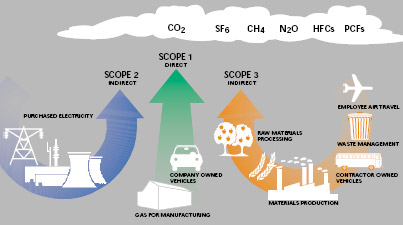
Session 2: Carbon accounting for homes, events, one off activities.

Session 3: Carbon accounting for institutions and service industry

Session 4: Completion of assignments and wrap up.

There will be a short assignment given after each of the first three sessions. Completion of the assignments is the last session.

The fee for the course is INR 3500 (inclusive of Service Tax).

All the participants will get the Samuchit Carbon Footprint Calculator - Premium Version 4 (which is the latest recently updated version). Those who will complete the full course, will also get a certificate from us.
You may enroll for just the first two sessions - which is a more detailed version of the Samuchit Lifestyle Workshop. The fee for the truncated course will be INR 2500 (inclusive of Service Tax).

It is necessary for everyone to bring a laptop computer for each session.

Why should anyone enroll for such a course?


As per the latest global agreement on climate change, signed in Paris in December 2015, India too needs to start counting its carbon emissions. Over the next few years, new mechanisms will also emerge under a newly structured carbon market, both internationally and nationally. I envisage that a basic understanding of carbon accounting will become as useful as is a basic understanding of financial accounting principles, for professionals and entrepreneurs in various sectors. I see the need for this evolving and expanding over the next 5-10 years. The course has been designed to address this need.

Who will benefit the most from this course?

First and foremost, this course will benefit professionals and entrepreneurs who are in the 'green' businesses (renewable energy, waste management, upcycling and recycling, water conservation, water management, ecosystem restoration, organic foods, green products, green construction, sustainable architecture, sustainable designing, etc.). The course will help these people in understanding the direct and indirect impact of their activities on climate change. This in turn will enable them to more effectively 'market' their activities in the climate finance/investment sector. 

Professionals or consultants that are involved in CSR activities of conventional businesses will also benefit in their decision making as well as impact assessments of their projects/activities. Similarly office bearers in large corporations and organisations, responsible for sustainability reporting will also gain useful insights through this course.

Last but not the least, teachers, students and researchers of economics, environment, business studies, politics, international relations, environmental law, etc., will find the course complimentary to their own subjects of interest.

How to enroll?
Please write to us at samuchit@samuchit.com, giving a brief introduction of yourself BEFORE 10 February.
Enrollment will be on first come, first served basis, provided 100% fee is paid in advance before the course starts.

Please note that the maximum number of seats available is 10.

I look forward to hearing from you!

Priyadarshini Karve
Director
Samuchit Enviro Tech


#BeModernBeResponsibleBeRespectful
    Samuchit Enviro Tech.     samuchit@samuchit.com     www.samuchit.com