Showing posts with label Carbon accounting. Show all posts

Saturday, November 12, 2022

Musings from Priyadarshini Karve: #COP27: Day 5

 #COP27: Day 5

11 November was the BIG high security day with the US President Joe Biden coming to the COP stage. Given USA's track record with the UNFCCC process, the US presence at COPs should be protested as much as the presence of fossil fuel industry at COP is protested! But unfortunately, politics trumps ethical considerations in this case. 

If the Kyoto agreement had actually been delivered by the developed world, we would not be in the mess that we are currently in. The most important factor that weakened the Kyoto agreement was USA, the biggest emitter of greenhouse gases, walking out of the treaty. 

The successor to Kyoto agreement was to be structured by 2010 and should have been ready to be implemented by 2015 if not 2012 (the end date for Kyoto agreement). This process was stalled by President Obama. This delayed the formulation of Paris agreement to 2015 and then its implementation to 2022 - nearly 10 years delay during which the earth continued to heat up. 

In 2016 President Donald Trump pulled USA out of the Paris Agreement and almost derailed the second and perhaps the last chance that humanity had to avoid or at least contain a civilizational collapse. 

President Biden brought USA back into the Paris Agreement as one of his first actions on getting elected. He has in the two years of his regime enacted certain measures that are likely to reduce USA's emissions by about 40%. But all this is too little too less. And the question remains - what happens if in 2024 USA gets a Republican president? 

In spite of these uncertainties and past disappointments the world has no option but to continue hoping for more meaningful action from USA and applauding whatever little is thrown our way because of its political and economic clout across the world. 

I stayed away from all the hoopla around President Biden's visit and address at COP which I am sure has already been reported by the press. Instead, I attended a very relevant discussion organised in the SDG pavilion by Council on Energy, Environment and Water (CEEW) and collaborators. This discussion was about accountability. 

Big political leaders make lofty announcements at COP. Big businesses were racing against each other to announce carbon neutrality targets in last year's COP at Glasgow. Big Multilateral Development Banks make big promises of finance for low carbon and climate adaptive infrastructure in every COP. But there is no standard mechanism or process to check what is happening around these claims in an objective way. Where is the accountability? How do we build a structure that will infuse accountability in climate action? How to get reliable data that will allow third party assessment of the claims? That was the focus of this discussion. 

For private businesses the carbon accounting process is one concrete way by which fulfilment of promises of carbon neutrality can be checked. For me the most interesting slide was what I show in the photograph below. 
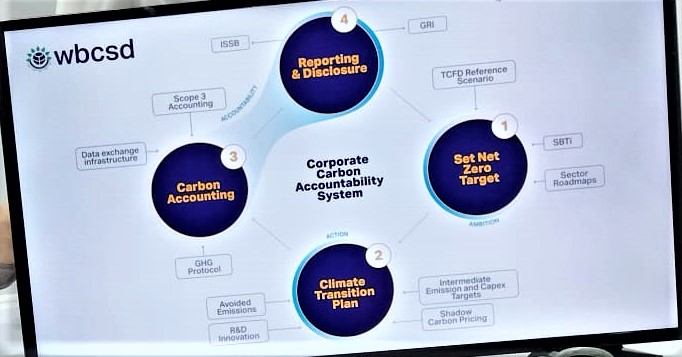
Accountability of Carbon neutrality pledges by the private sector

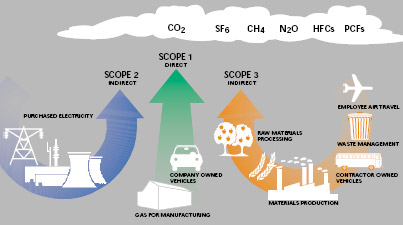
A carbon neutrality pledge is generally aimed at some future date like 2040 or 50 or beyond. This must be backed by an action plan with short term milestones that clearly show the path to be followed. Then standard protocols must be established for carbon accounting - not limited just to direct use of electricity and fossil fuels (what are called Scope 1 and Scope 2 emissions) but also accounting for the indirect emissions from actions such as sourcing of raw materials, construction and maintenance of infrastructure, managing waste on a daily basis and at the end of life of products, contracted out services, etc. (all of these are collectively called Scope 3 emissions). Current carbon accounting standards do not insist on Scope 3 accounting in spite of the fact that for many private sector entities this is the biggest contributor to their carbon footprint. And finally transparent and honest disclosure of the data is also important. 

All of this resonated very well with me because I have been saying more or less the same things for a few years. After Paris Agreement and the 1.5 deg C report by UNFCCC I felt that beyond investing in renewable energy infrastructure etc., the governments will have to eventually demand lowering of emissions by the private sector and might start including such pledges in the NDC. In that case it might become mandatory for companies to report their carbon emissions periodically. To an extent this has started appearing in NDcs from Europe. India cannot be far behind. 

I also felt that as more and more NGOs and institutions engage with the climate change issue, they should 'walk the talk' by going for low carbon operations and presenting the evidence to the world in a transparent way. 

Converting this thinking into action, we conducted a carbon accounting exercise for the headquarters of Laya, the secretariat of INECC. We have also tried to estimate the carbon emissions of some of our meetings and have tried to keep these as low as practically feasible. A few years ago, we launched a participatory process for educational institutions to go for carbon neutrality as a joint project by students, teachers and management, with our role as that of a mentor rather than a consultant. 

However, I could also see that in India we don't have enough people with even a basic understanding of what carbon accounting is - let alone be qualified carbon accountants and auditors. We need to build this basic understanding if carbon accounting is going to be a mainstreamed process in industry, academia and civil society. So, I launched an online course with the limited aim of building 'literacy' about carbon accounting around 2016. 

I in fact thought even beyond the accountability concerns that the panelists talked about. The IPCC Assessment Report 6 clearly stated that even stopping emissions is no longer going to be enough to meet the 1.5 deg C goal of the Paris Agreement. We have to also invest in removal of carbon dioxide from the atmosphere. Currently the only way to do that is to increase the land cover under natural ecosystems to sink the carbon into vegetation. Many of the carbon neutrality pledges are relying on creating carbon sinks. How does one account for that? I feel that the carbon accounting protocols need to include a component to estimate the 'sunk carbon' too. I have tried to include a flavour of that approach in my course. 

We ran the carbon accounting course in a rather amateurish and low-key manner for the past 5-6 years and then COVID happened. It has certainly opened my eyes to the various tools available and possibilities around online education. The course is currently being revamped in collaboration with 'Climatora'. Stay connected with Samuchit Enviro Tech on social media to know more about this! 

In the meanwhile, you can try our personal carbon footprint calculator in its new and revamped version made in collaboration with Climatora on this link.


Priyadarshini Karve
Director, Samuchit Enviro Tech
Convener, Indian Network on Ethics and Climate Change. 

Saturday, January 6, 2018

MUSINGS FROM PRIYADARSHINI KARVE: Quest for Carbon Negativity Part 2 शोध कार्बन निगेटिव्हिटीचा भाग २

In the previous blog, I talked about how converting garden waste to char can take you towards carbon negativity, as against burning in open air or composting the garden waste. But charring also opens up other easy to use ways to reduce your personal impact on the environment. 

मागच्या ब्लॉगमध्ये बागेतल्या पालापाचोळा व काडीकचरा उघड्यावर जाळण्याऐवजी किंवा त्याचे कंपोस्ट करण्याऐवजी त्याचा कोळसा करून आपण कार्बन निगेटिव्हिटीकडे कसे जाऊ शकतो, याबद्दल मी बोलले होते. पण कोळसा आपल्याला पर्यावरणावरचा आपला व्यक्तिगत अनिष्ट परिणाम कमी करण्याचे आणखीही काही सोपे मार्ग उघडून देतो.  

* If you add the char to your garden soil, it will help retain moisture and create more space for soil bacteria to reside in. Thus, the water requirement of your garden will reduce, and your soil will become more fertile, reducing the requirement of any kind of fertilizer. As your garden becomes more efficient in producing plant biomass per unit resources put in, you are indirectly contributing to the natural process of removing carbon dioxide from air.

* जर तुम्ही हा कोळसा आपल्याच बागेतील मातीत मिसळून टाकलात, तर तो ओलावा धरून ठेवतो, आणि मातीतील जीवाणूंना रहाण्यासाठी अधिक जागा उपलब्ध करून देतो. यामुळे आपल्या बागेची पाण्याची गरज कमी होते, आपली माती अधिक सुपीक होते, आणि आपली कोणत्याही प्रकारच्या खताची गरज कमी होते. आपण मातीत घालत असलेल्या संसाधनांच्या तुलनेत जैवभार निर्माण करण्याची आपल्या बागेची कार्यक्षमता जशी वाढत जाते, तसे आपण हवेतील कार्बन डायॉक्साइड काढून घेण्याच्या नैसर्गिक प्रक्रियेला अप्रत्यक्षरित्या हातभार लावतो. 

* Char has the capacity to capture and hold organic molecules. You can therefore use the char as organic deodorizer in your toilet, closet, or car, thereby avoid using chemical air freshners. This is another indirect contribution to reducing carbon emissions by replacing a product that is transported over long distances with a local product and also reducing air pollution. After a couple of months of use of the organic deodoriser, the char powder can be put into the soil to improve the soil quality and we also help remove the carbon from air. 

* कोळशामध्ये सेंद्रीय रेणू पकडण्याची आणि धरून ठेवण्याची क्षमता असते. त्यामुळे आपण तयार केलेला कोळसा आपल्या स्वच्छतागृहात, बंद कपाटात, गाडीमध्ये नैसर्गिक दुर्गंधीनाशक म्हणून वापरू शकतो, आणि रासायनिक दुर्गंधीनाशकांचा वापर टाळू शकतो. लांबून वहातूक करून आणाव्या लागणाऱ्या उत्पादनाच्या जागी स्थानिक उत्पादन वापरूनही आपण अप्रत्यक्षरित्या कार्बन उत्सर्जन आणि हवेचे प्रदूषण थांबवण्याला हातभार लावतो. साधारण दोनेक महिने दुर्गंधीनाशक वापरल्यानंतर त्यातील कोळसा पावडर मातीत मिसळून टाकली तर मातीची सुपिकता सुधारून हवेतला कार्बन काढून घेण्याला हातभारही लावता येतोच.  

* If you process the char to make char briquettes and use these as fuel with Samuchit Steam Cooker, you can avoid using LPG or PNG as cooking fuel for at least 50% of your cooking. Both of these gases are fossil fuels and therefore contribute to carbon emission when used, without any natural return path for the carbon to come back to the earth’s surface as fossil fuels. When you burn char, you are contributing to carbon emission too, but the char we are using is made from dry leaves and twigs shed by trees and bushes. Even if we had not made any use of the garden waste, the carbon was going to go back to the atmosphere anyway. The trees and bushes from where the waste has originated are still growing, and therefore the carbon is naturally getting converted back into biomass. Thus, by using carbon that is part of a natural carbon cycle for meeting our cooking energy need, we are avoiding use of the corresponding amount of fossil fuel, and thus contributing to reducing carbon emission. 

* जर तुम्ही पालापाचोळ्याच्या कोळशावर आणखी प्रक्रिया करून कांडी कोळसा तयार केलात, तर तुम्ही समुचित स्टीम कुकरमध्ये इंधन म्हणून त्याचा वापर करू शकता. यापध्दतीने तुम्ही तुमचा किमान ५० टक्के स्वयंपाक एलपीजी किंवा पीएनजी न वापरता करू शकता. हे दोन्ही वायू खनिज इंधने आहेत, त्यामुळे त्यांचा वापर होतो तेव्हा कार्बन उत्सर्जन होते, आणि हा कार्बन वातावरणातून परत पृथ्वीतलावर खनिज इंधन या मूळ स्वरूपात आणण्याचा कोणताही नैसर्गिक मार्ग कार्बनचक्रात नाही. कोळशाच्या ज्वलनानेही कार्बन उत्सर्जन होतेच आहे, पण आपण वापरत असलेला कोळसा झाडाझडुपांवरून गळून पडलेल्या पालापाचोळ्याचा आणि काडीकचऱ्याचा बनवलेला आहे. आपण हा कचरा वापरला नसता, तरी त्यातला कार्बन या ना त्या मार्गाने हवेत जाणारच होता. या कचऱ्याचे मूळ असलेल्या झाडाझुडुपांची वाढ होतेच आहे, त्यामुळे हवेत गेलेला हा कार्बन नैसर्गिकरित्या परत जैवभारात रूपांतरित होणारच आहे. त्यामुळे नैसर्गिक कार्बन चक्राचाच भाग असलेल्या कार्बनचा जेव्हा आपण स्वयंपाकाची ऊर्जा सेवा मिळवण्यासाठी वापर करतो, तेव्हा तेवढ्या स्वयंपाकासाठी खनिज इंधनांचा वापर टाळून आपण कार्बन उत्सर्जन कमी करण्याला हातभार लावतो. 

Samuchit Steam Cooker Stove
समुचित स्टीम कुकर स्टोव्ह
Samuchit Steam Cooker Stove allows us to cook everything that is prepared by boiling and steaming (e.g., rice, pulses, steamed vegetables, idali, dhokla, boiled eggs, boiled corn, etc.). As the food gets cooked slowly and at a relatively lower temperature, it is healthier and tastier. At the same time, the stove, once set up and started the fire, does not require any attention, and therefore is a great time saver for the cook. 
MRP with taxes INR 3500. 

समुचित स्टीम कुकर स्टोव्हमध्ये आपण उकळून व वाफवून करण्याचे सर्व पदार्थ (उदा. भात, डाळ, वाफवलेल्या भाज्या, इडली, ढोकळा, उकडलेली अंडी, उकडलेले मक्याचे दाणे, इ.) तयार करू शकतो. यामध्ये अन्नपदार्थ सावकाश व कमी तापमानाला शिजत असल्याने अधिक पौष्टिक व रुचकर बनतात. त्याचवेळी, एकदा तयार करून कोळसा पेटवल्यानंतर त्याच्याकडे लक्ष द्यावे लागत नाही, आणि त्यामुळे स्वयंपाक करणाऱ्याचा वेळ वाचतो. 
करासह किंमत रू.३५००. 


India has voluntarily taken on ambitious targets of reducing the country level carbon emission between 2020 and 2025, under the Paris Agreement on Climate Change that was signed in 2015. If India manages to not just meet but exceed the target, it will make us a leader in global politics in a period where climate change is increasingly taking centre stage in international negotiations around trade and technology transfer agreements. Urban Indians need to take on more responsibility to achieve this as we are contributing substantially to India's carbon emissions through our lifestyle. 

२०१५ साली जागतिक वातावरणबदलाबाबत झालेल्या आंतरराष्ट्रीय पॅरिस करारात भारताने २०२० ते २०२५ या कालावधीत आपले राष्ट्रीय कार्बन उत्सर्जन कमी करण्यासाठी काही महत्वाकांक्षी ध्येये स्वेच्छेने स्वीकारली आहेत. पण २०२५ पर्यंत आपण ही ध्येये गाठण्यातच नाही तर त्यांच्याही पुढे जाण्यात यशस्वी झालो, तर जिथे जागतिक वातावरणबदल वेगवेगळ्या आंतरराष्ट्रीय वाटाघाटी आणि व्यापारी करारांतही महत्वाची भूमिका बजावतो आहे, अशा जागतिक राजकारणात आपली पत उंचावेल. आपल्या राष्ट्रीय कार्बन उत्सर्जनात शहरी भारतीयांच्या जीवनशैलीचा मोठा वाटा आहे. त्यामुळे शहरी नागरिकांनी कार्बन उत्सर्जन कमी करण्याच्या प्रयत्नांना अधिक हातभार लावला पाहिजे. 


If farmers in Punjab choose to go carbon negative, they will not only support India's Climate Change Mission, but will also help solve Delhi's winter smog problem. If we in Pune embrace carbon negativity today, it will help us avoid being in the same situation as Delhi tomorrow. 

पंजाबमधील शेतकऱ्यांनीही कार्बन निगेटिव्हिटीची कास धरली, तर त्यातून भारताच्या जागतिक वातावरणबदलाबाबतच्या मोहिमेला हातभार तर लागेलच, पण दिल्लीत दर हिवाळ्यात सोसाव्या लागणाऱ्या धुक्याच्या समस्येवरही मात करण्याच्या प्रयत्नांनाही मदत होईल. पुण्यामध्ये आज आपण कार्बन निगेटिव्हिटीची कास धरली तर उद्या दिल्लीतल्या परिस्थितीसारखीच समस्या निर्माण होण्यापासून आपण बचावू शकू.  


Priyadarshini Karve

Samuchit Enviro Tech, Pune


प्रियदर्शिनी कर्वे
समुचित एन्व्हायरो टेक, पुणे


#BeModernBeResponsibleBeRespectful


 Samuchit Enviro Tech         samuchit@samuchit.com         www.samuchit.com

Wednesday, January 3, 2018

MUSINGS FROM PRIYADARSHINI KARVE: Quest for Carbon Negativity Part 1 शोध कार्बन निगेटिव्हिटीचा भाग १

Samuchit Trashflasher Kiln
समुचित ट्र्रॅशफ्लॅशर भट्टी
Samuchit Sampada Stove (Mini Trashflasher)
समुचित संपदा शेगडी (मिनी ट्रॅशफ्लॅशर)

As the topic of this blog is of local and global importance, I am writing in both English and Marathi.

या ब्लॉगचा विषय स्थानिक आणि जागतिक महत्वाचा असल्यामुळे इंग्रजी आणि मराठी अशा दोन्ही भाषांमध्ये लिहिते आहे.


If you have a garden, you are aware that throughout the year a lot of garden waste is being generated. If you have big trees, they shed a lot of leaves especially during winter. These leaves, and other wastes like twigs, etc. too, if left as they are, will eventually decompose and will improve soil quality. In many cases to clean the garden, the waste is swept to one side and burnt off. Environmentally conscious individuals would compost rather than burn.

तुमच्या इमारतीभोवती बाग असेल, तर बागेत वर्षभर जैव कचरा निर्माण होत रहातो, हे तुम्ही पाहिले असेल. मोठे वृक्ष असतील तर विशेषतः हिवाळ्यात मोठ्या प्रमाणावर पानगळ होत असते. ही पाने आणि इतरही काटक्या कुटक्या वगैरे जमिनीवर तशाच राहू दिल्या तर कालांतराने त्या कुजतात, आणि मातीची सुपीकता वाढवण्याला हातभार लावतात. पण बऱ्याच ठिकाणी बाग स्वच्छ करण्यासाठी सगळा कचरा झाडून एका बाजूला केला जातो आणि जाळून टाकला जातो. पर्यावरणाबाबत जागरूक असलेल्या व्यक्ती जाळून टाकण्याऐवजी त्याचे कंपोस्ट करतात. 

Burning in open air is obviously the worst of the three options, as it leads to a lot of local pollution. Composting is time consuming and also needs space and daily attention. Letting the biomass waste generated by plants lie on the soil around their roots is the best and most natural option. However, this makes your garden look unkempt, and also there is danger of snakes and other harmful animals taking shelter in the layer of dry leaves and twigs. There is also the risk of fire if someone drops a burning cigarette butt, etc., on the leaf litter.

उघड्यावर कचरा जाळणे हा अर्थातच तिन्हीपैकी सर्वात वाईट पर्याय आहे, कारण त्यातून मोठ्या प्रमाणावर स्थानिक प्रदूषण होते. कंपोस्ट करणे वेळखाऊ आहे, त्यासाठी जागा लागते, आणि रोज लक्ष द्यावे लागते. वनस्पतींनी निर्माण केलेला जैव कचरा तसाच त्यांच्या मुळांशी मातीत पडू देणे हा सर्वात चांगला व नैसर्गिक पर्याय आहे. मात्र यामुळे आपली बाग नीटनेटकी दिसत नाही. शिवाय साप किंवा इतर उपद्रवी जीव या पालापाचोळ्याच्या आणि काडीकचऱ्याच्या थरात आश्रय घेण्याचा धोका असतो. जर कोणी सिगरेटचे थोटूक या कचऱ्यात टाकले, तर आग लागण्याचाही धोका असतो.

From climate change perspective, all three options have the SAME effect - the carbon removed from the atmosphere by the plants through photosynthesis, is returned to the atmosphere, either through natural decay, or burning, or composting.

क्लायमेट चेंजच्या दृष्टिकोनातून विचार केला, तर वरील तिन्ही पर्यायांचा परिणाम एकच होतो – वनस्पतींनी प्रकाशसंश्लेषणाद्वारे हवेतून काढून घेतलेला कार्बन नैसर्गिक रित्या कुजण्यातून, किंवा ज्वलनातून किंवा कंपोस्टिंगच्या क्रियेतून पुन्हा हवेत परत जातो.

There is a FOURTH option of charring the garden waste. This will allow you to capture 30% of the carbon in the waste in the form of char - solid carbon that will remain as it is for thousands of years, if left untouched. In other words, 30% of the carbon is permanently removed from the return path of the biological carbon cycle loop. You have made your garden Carbon Negative!

एक चौथा पर्यायही आहे – बागेतल्या कचऱ्याचा कोळसा करणे. यामध्ये कचऱ्यात असलेल्या एकूण कार्बनपैकी ३० टक्के कार्बन कोळसा या स्वरूपात हवेत न जाता मागे रहातो. जर तुम्ही या कार्बनला अजिबात हातही लावला नाही, तर तो हजारो वर्षे याच स्वरूपात रहाणार आहे. थोडक्यात म्हणजे तुमच्या बागेत चालू असलेल्या जैविक कर्बचक्रातला ३० टक्के कार्बन तुम्ही चक्राच्या परतीच्या मार्गातून कायमस्वरूपी बाहेर काढला. तुमची बाग तुम्ही कार्बन निगेटिव्ह केली!

Samuchit Trashflasher Kiln:

समुचित ट्रॅशफ्लॅशर भट्टी:

The size of garden space and therefore the amount of garden waste generated on the campus of a housing society or educational or research campus, or factory or business premises, etc. is rather high. This kiln is designed for such users. It disposes off about 3-4 kg of garden waste in 15-20 min and generates about 1-2 kg of char.
Price inclusive of taxes: INR 5000, includes on site demonstration and training anywhere in Pune

गृहनिर्माण संस्था, शैक्षणिक किंवा संशोधन संकुल, कारखाने व इतर व्यावसायिक परिसर अशा ठिकाणी बागेची व्याप्ती आणि त्यामुळे रोज निर्माण होणाऱ्या जैविक कचऱ्याचे प्रमाणही जास्त असते. ही भट्टी अशा ठिकाणी वापरण्यासाठी बनवलेली आहे. दर १५-२० मिनिटांत ३-५ किलो कचऱ्याची विल्हेवाट लावून साधारण १-२ किलो कोळसा निर्माण करण्याची या भट्टीची क्षमता आहे.
करासहित किंमत रू ५०००. पुण्यात ग्राहकाच्या ठिकाणी प्रात्यक्षिक व प्रशिक्षण अंतर्भूत.

Samuchit Sampada Stove (mini trashflasher):

समुचित संपदा शेगडी (मिनी ट्रॅशफ्लॅशर):

This very handy ‘mini trashflasher’, is best suited for dealing with small quantities of garden waste generated in private gardens. If you are generating waste in the form of twigs and small branches, it can also be used as a stove for heating bath water.
Price inclusive of taxes: INR 3500, includes demonstration and training at our office

व्यक्तिगत छोट्या बागेत निर्माण होणाऱ्या कमी कचऱ्यासाठी ही एक वापरायला अतिशय सोपी अशी मिनी ट्रॅशफ्लॅशर भट्टीच आहे. काटक्याकुटक्यांच्या स्वरूपातला कचरा असेल, तर अंघोळीचे पाणी तापवण्याची शेगडी म्हणूनही तिचा वापर होऊ शकतो.
करासह किंमत रू ३५००. आमच्या कार्यालयात प्रात्यक्षिक व प्रशिक्षण अंतर्भूत.

I want to share much more with you... Part 2 coming soon!

आणखीही पुष्कळ सांगायचे आहे... दुसरा भाग लवकरच येतो आहे!


Priyadarshini Karve

Samuchit Enviro Tech, Pune


प्रियदर्शिनी कर्वे
समुचित एन्व्हायरो टेक, पुणे


#BeModernBeResponsibleBeRespectful


Samuchit Enviro Tech         samuchit@samuchit.com         www.samuchit.com

Wednesday, January 27, 2016

MUSINGS FROM PRIYADARSHINI KARVE: Let's become Carbon Auditors!

In my previous post at the start of the year I mentioned about a few new ventures of Samuchit Enviro Tech which will evolve over 2016. Today I am happy to unveil the details of the newest of these three ventures: A Basic Course on Carbon Audit.

Of course as the name suggests, if there is good response, we might launch an Advanced Course too in future!


The Basic Course will be spread over four Saturdays, 2 pm to about 5 pm. I am planning to start the course from Saturday, February 20. The course contents will be: 

Session 1: Climate Change - Science, Politics, Economics

Session 2: Carbon accounting for homes, events, one off activities.

Session 3: Carbon accounting for institutions and service industry

Session 4: Completion of assignments and wrap up.

There will be a short assignment given after each of the first three sessions. Completion of the assignments is the last session.

The fee for the course is INR 3500 (inclusive of Service Tax).

All the participants will get the Samuchit Carbon Footprint Calculator - Premium Version 4 (which is the latest recently updated version). Those who will complete the full course, will also get a certificate from us.
You may enroll for just the first two sessions - which is a more detailed version of the Samuchit Lifestyle Workshop. The fee for the truncated course will be INR 2500 (inclusive of Service Tax).

It is necessary for everyone to bring a laptop computer for each session.

Why should anyone enroll for such a course?


As per the latest global agreement on climate change, signed in Paris in December 2015, India too needs to start counting its carbon emissions. Over the next few years, new mechanisms will also emerge under a newly structured carbon market, both internationally and nationally. I envisage that a basic understanding of carbon accounting will become as useful as is a basic understanding of financial accounting principles, for professionals and entrepreneurs in various sectors. I see the need for this evolving and expanding over the next 5-10 years. The course has been designed to address this need.

Who will benefit the most from this course?

First and foremost, this course will benefit professionals and entrepreneurs who are in the 'green' businesses (renewable energy, waste management, upcycling and recycling, water conservation, water management, ecosystem restoration, organic foods, green products, green construction, sustainable architecture, sustainable designing, etc.). The course will help these people in understanding the direct and indirect impact of their activities on climate change. This in turn will enable them to more effectively 'market' their activities in the climate finance/investment sector. 

Professionals or consultants that are involved in CSR activities of conventional businesses will also benefit in their decision making as well as impact assessments of their projects/activities. Similarly office bearers in large corporations and organisations, responsible for sustainability reporting will also gain useful insights through this course.

Last but not the least, teachers, students and researchers of economics, environment, business studies, politics, international relations, environmental law, etc., will find the course complimentary to their own subjects of interest.

How to enroll?
Please write to us at samuchit@samuchit.com, giving a brief introduction of yourself BEFORE 10 February.
Enrollment will be on first come, first served basis, provided 100% fee is paid in advance before the course starts.

Please note that the maximum number of seats available is 10.

I look forward to hearing from you!

Priyadarshini Karve
Director
Samuchit Enviro Tech


#BeModernBeResponsibleBeRespectful
    Samuchit Enviro Tech.     samuchit@samuchit.com     www.samuchit.com