Showing posts with label plastic. Show all posts

Wednesday, August 4, 2021

Internship Encounters - Carbon Neutral Freshers' Party

 Dear All, 

Last time I shared an incident from one of our interns during her internship survey. You can check out the blog here. The same intern Tejaswini Datar writes again to talk about one of her interesting encounters like having a Carbon Neutral Freshers' Party. 

Check it out, how aiming at Carbon Neutral helps a long way in making conscious decisions in everything that we do in a way to make the world a better place to live.   


Freshers' Party Decoration

Our class once had a lecture by Dr. Priyadarshani Karve ma'am. The lecture was so inspiring that at the end of it our perspective changed drastically. We casually started throwing words like primary, secondary, tertiary scopes of carbon footprint. We started carpooling more. Hangout places were changed. Everyone double checked the light, fan switches leaving any room. We started consuming less electricity, started thinking about how to reduce the waste we generate. The whole class decided to start being more careful about our next steps to reduce carbon footprint. (get it?!) That change was subconscious. I remember buying something and contemplating my options over material, origin of the product, manufacturing, lifespan and decomposition period. It was just a T-shirt! 


Amidst of all this, someone suggested we throw our freshers a party, a zero-carbon party! We considered everything. Including invitations, preparation, decoration, catering, transport, entertainment, party favours, wrapping paper, bags, energy consumption, utilization of resources, end result, decomposition, wastage etc. What could be considered? What comes under which scope? We wanted to ensure zero carbon emission. It was an ambitious plan which didn’t work out exactly, but we figured if not a zero carbon party, we would settle for a carbon neutral party. 

(Need help to simplify definitions)
Zero carbon means that no carbon emissions are being produced from a product or service. This may be ensured by using totally renewable resources and energy through the lifecycle of the product or the service.
Carbon neutral means that while some emissions are being generated by a building or a process, these emissions are balanced by being offset somewhere else, making the net emissions zero.
Carbon offsetting is basically a process where organisations and individuals ‘balance’ out their carbon footprints by financing emission reductions elsewhere, which can ‘offset’ their own activities and emissions.  

After A LOT of planning and organizing our game plan was ready. We wanted an environment friendly party but not a shoddy, tawdry affair. Because, izzat ka sawal tha! We opted for locally sourced goods, local caterer (walking distance), reusable, washable utensils. People were instructed not to waste food. It was subtly monitored. Leftover food was carefully collected and donated to needy people. No wastage there! Waste paper was reused for planning, invitations, coupons, gift wrapping, decoration, etc. Every paper used in the party was reused. Reminders were sent digitally. Electricity consumption was minutely observed. Carpooling with nearby colleagues reduced the number of cars thus reducing GHG emission. A happy accident happened as a result because people mingled with new people and not just their usual group. Entertainment, games were either propless or organised with reused materials. Gift favours were a small tulsi plant. 

We had a blast! It was a great party! When we started out, we aimed for zero carbon, settled for carbon neutral, and ended up with a low carbon party. We had a great time, but our attempt was not totally successful. We genuinely worked so hard and at the end, we were faced with harsh reality. This was the result after a lot of planning and hard work. We realised that doing all these couldn’t achieve zero carbon, what would have happened if we hadn't even taken these measures?! What happens when we don’t apply some thought in our everyday chores? The realization was horrifying. We are failing by not taking preventive measures. We are already late to the party, soon, it would be too late to do anything about it. So, come on, let’s do this together. Let’s make our world better! Offer our future generation to inherit a better environment to survive, to grow and to party!!

                                                                                                                   Author: Tejaswini Datar

Wednesday, May 13, 2020

My City My Responsibility - Future of the Story of Plastic!

Dear All,

PPE made of Plastic

Plastic an ubiquitous thing on earth and is quite indispensable for most of us whether we like it or not. Yet this invention has now become an evil for the environment due to innumerable reasons.  When it comes to sustainability, plastic appears to be one of those materials that can be very efficient, cost effective and user friendly. However plastic waste disposal is a global problem that is choking up our oceans, filling our lands and entering our food chains. These thoughts were triggered after watching the documentary titled Story of Plastic aired on the occasion of this year's Earth Day. 

This documentary not only shows how big is the plastic pollution problem but also shows where does it come from and how it is a systemic problem than just an individual's choice. It captures the entire supply chain right from the use of petroleum to produce plastic to plastic pollution to its implications for climate change. Indeed it is an eye opening documentary when it comes to the life threatening impacts of plastic pollution. It pictures how managing the plastic waste is bigger challenge for developing countries where the plastic wastes are being shipped all the way by the developed nations. But when plastic wastes are no more accepted by the developing countries, how ineffective recycling plants create downgraded plastic products that cause even much more harm. Plastic pollution and its linkages with poverty, cheap labor and women who are involved in the overall process of sorting the wastes, recycling and processing especially in India have been highlighted as well. However packaging material and consumption of single-use plastic products like straws, carry bags and shampoo or food sachets etc pose bigger challenges of disposal, is the ultimate issue that we have been grappling with as per the documentary while the mismanagement of plastic is just an excuse to get away from the hidden agenda of the petroleum companies.

Given all these facts and concerns, the movie fails to effectively showcase the way forward apart from a ban on single use plastic and packaging material. The movie completely disregards the benefits of plastic especially if we consider the current pandemic scenario where PPE's made out of plastic have been the most efficient and easily affordable material for our safety. 

Me @Khamir in Kachchh
learning to weave plastic bags
PC: Dr Priyadarshini Karve
I believe it is important to understand that even if we ban plastic completely today, an existing single waste bottle will take upto 450 years to decompose. From the entire host of plastic products that we consume to the huge plastic products that we use, its quite obvious that plastics are here to stay forever. So definitely banning plastic may not be that helpful, however can we explore and have stringent policies in place in order to phase out the production of virgin plastic along with creating complex recycling techniques that are effective, local and low cost that will ensure upcycling plastic waste into a much better and more durable and eco-friendly product? One such local example that quickly comes to my mind is of Aarohana Ecosocial development a plastic upcycling initiative by Amita Deshpande where plastic carry bags are cleaned and woven into attractive handbags, purses and mats that even generate local livelihoods for women. Inspired by Khamir, a platform in Kachchh that promotes indigenous knowledge on handicrafts and allied cultural practices for creation and preservation of local communities.

From the packaging problem perspective, a global standardization for packaging can be adopted that will improve recycling and ease resource recovery which in turn will enable circular economic models. As per Our World in Data statistics, mismanaged plastic waste is generated highly by the high income groups versus low income groups, but that is mostly due to accessibility, its not that the low income groups are wiser! Also countries having longer coastlines have seen tremendous mismanaged plastic wastes. So the question of managing plastic waste can be tackled only with the help better segregation and effective waste management infrastructure.  

When we talk about segregation another challenge is the segregation within the various plastic items, because some products like transparent PET bottles can be easily recycled or reused, while some products may need complicated processes in order to recycle them. The used PPE's are of hazardous nature and will have to be incinerated right away. For such products we need more effective technologies for incineration that are least polluting. Given the nature of plastic and its versatility, we need to explore for more such processes where a plastic waste turns out to be the raw material for another product.

Now that there is so much plastic in nature, some bacteria and fungi have started evolving the ability to eat it. Apart from recycling, such interesting ways to deal with plastics wastes are upcoming. Another concept of producing bioplastics from startch are already available, however problems with this plastic is about its look and feel which is exactly same like ordinary plastic and hence differentiating it is difficult plus its also a controversial issue when it comes to food security. Hence there's a lot of scope for research in this field to produce sustainable polymers.

In one of my earlier blogs I did mention why plastics were ever invented. A lot of scope lies for sustainable innovation given the technological advances today, industries have a great role to play. Better quality of plastics can be produced that have low carbon footprint and hence can reduce pollution. The idea is to no longer term plastic as WASTES but as a KEY resource and start reusing it at source. Many individuals do come up with innovative ways that ensure their plastics don't end up in a landfill or an ocean. A more systemic approach will help to solve the plastic problem that involves engaging public sector as well as private sector to pitch for effective enforcement of existing policies and strategies. 

In October 2018, UN Environment programme and the Ellen Mcarthur Foundation announced the New Plastics Economy Global Commitment with more than 290 signatories having a common vision to treat plastics at source based on circular economy models. One of the pioneers in circular economy has been the Banyan Nation who are converting collected post consumer and industrial plastic waste into high quality recycled granules which are termed as Better Plastic that has strength as good as virgin plastic. There are several such examples already who are using plastic as a resource for better economic gains. Its time we start valuing plastic as a raw material and use it effectively for the betterment of the environment.

Pournima Agarkar. 

Like/Follow/Share us on Facebook, Instagram, Twitter  Citizens of Sustainable Pune 

Tuesday, January 8, 2019

My City My responsibility - Experience at KVIFF EcoBazaar!

Dear All, 
Word Cloud - Peoples vision of Pune city

In the last week I attended the Kirloskar Vasundhara International Film Festival (KVIFF) organized by the Kirloskar Group. This is a week long festival held every year in the month of January in many cities of India. In Pune KVIFF was hosted from 3rd Jan to 7th Jan 2019. This festival involves film screenings and other allied activities like seminars, panel discussions, workshops on a specific environmental theme. Eco bazaar - an exhibition exclusively for ecofriendly products and innovations - is an important part of the festival. This year the theme of the festival was in line with the UN theme for World Environment Day 2018 i.e 'No to Plastic and Yes to Earth'. This is KVIFF's thirteenth year of creating an environmental protection movement that aims to enrich lives of the citizens of the city. I feel its a great platform for availing information on environmental issues through films and other allied activities.  

Karan Shelar at Ecobazaar
This year at the  Eco bazaar along with our products Deodorizer, Samuchit Steam cooker (upgraded model of Sarai cooker), Sampada gasifier stove, Charring kiln and Self watering pots, we introduced our family carbon footprint calculator, developed by Dr. Priyadarshini Karve and launched as a web app by Pune International Centre (PIC). We also conducted a live poll on Vision for Pune city from the visitors. While Prashant Borate, Supriya Borate and Karan Shelar were involved in presenting the Samuchit products. I was involved in interacting with the people for the carbon footprint calculation and the live poll along with Aditi and Akash from PIC who also joined us. Dr Priyadarshini Karve supported all of us!!! 


Supriya Borate at Ecobazaar


Prashant Borate at Ecobazaar
Dr Karve at Ecobazaar

Calculating carbon footprint
It was good to know that a lot of people were already aware about carbon footprint and why it is important, some people were even scared to know about their footprint since they had a suspicion that it would be high! Yet many people calculated their footprint using our calculator. Unsurprisingly everyone who had an impression that their footprint is less were shocked to know that per capita footprint was either 2.7 or 3 tCO2eq. The whole idea of calculating carbon footprint of urbanities is to understand that though at the country level India's carbon footprint stands well below the norm of 2 tCO2eq. At the city level it is around 3 tCO2eq and above. Our calculator is a tool to measure how much carbon emissions we generate due to our daily activities.

Click here for calculating your carbon footprint using our calculator. Once you get your results, please write to us at pournima@samuchit.com we can guide you on how to reduce your footprint!

Our live poll activity on Vision of Pune city, will be active till this Sunday (13th Jan), you can check out the instructions below for giving your responses. You can feed in multiple responses but each response has to be ONEWORD. The word cloud posted above is the result of the responses received till date, word cloud generated through your responses will help us in policy advocacy for our city and hence your response matters a lot as a citizen! 

Instructions to participate in the live poll

This was my experience at the KVIFF Ecobazaar. Were you there? Did you participate in some way or were you a spectator? kindly share your experiences as well! 


Pournima Agarkar. 

"the power of the people is much stronger than the people in power.”Wael Ghonim


Tuesday, June 26, 2018

My City My Responsibility - Plastic a boon or a curse!

Dear All, 


The plastic ban effective from 23rd June has triggered pro-environment emotions among many people to support the ban and are exploring alternatives that can replace all the plastic. While on the other hand there are many people who just think that the ban is unfair since it targets cheap plastic carry bags and not the packaging industry which is the bigger culprit. However, the plastic ban can be a first step towards sustainable waste management only if the government provides proper channel for the management of plastic wastes instead of penalizing people for using plastic.  


This is not the first time plastic is banned, the first ban on plastic carry bags came in the year 2006 where the use of plastic carry bags having less than 50 microns in thickness was banned through the Maharashtra Plastic Carry Bags (Manufacture and Usage) Rules, 2006 but it did not serve its purpose due to lack of strict enforcement, no clarification on intention as to why only 50 microns etc. thus lack of effective awareness creation by the government led to the failure of the plastic ban in 2006. Now, there is a lot of awareness about plastic wastes menace but the way the 2018 ban is implemented is still questionable.  

Reused plastic can
(Courtesy: Smita Mehetre)
It is important to note that despite the environmental and health hazards caused due to plastic wastes, plastic wasn't invented with that intention. I would like to narrate one such example from an article written by Dr. Priyadarshini Karve on Plastic (Source: E-Shaishanik Sundarbh 111 Apr-May 2018). Back in the 18th century, the discovery of plastic replaced ivory that was largely used in the making of billiard balls, this ivory would be fetched by slaughtering elephants for their tusk's, it rampantly depleted the elephant population. In 1869, John W. Hyatt, invented the first plastic by treating cellulose which formed a good substitute for ivory and was rewarded $10,000. This discovery actually saved lives of elephants from extinction and plastic became a boon for people as it was cheap, easily moldable into any shape or size and durable. I am sure everyone will agree with me on the benefits of plastic, then why are we facing so many problems with plastic wastes???

I feel its our one time use and throw attitude because when we throw it away it goes no where but comes back to us. As I have already mentioned in my earlier blogs that until our attitude towards consumption does not change, we are always going to fall in this vicious cycle. However with our generation which is full of innovation and is conscious we can replace plastic with anything better just by changing our behavior, or by finding a better way of dealing with plastics or by inventing some new material. Its in our hands to make plastic a boon or a curse! 

Pournima Agarkar.
www.samuchit.com

Tuesday, March 13, 2018

My City My Responsibility - Towards River Revival


Dear All, 

Our city is full of role models because of which I feel fortunate to be a Puneite. These people not only motivate you but also create an awakening within you to do something for the city.  

One such personality is Mr. Vinod Bodhankar. He began with a citizens movement with the One hour per week for the city - an initiative to clean the garbage that other people throw around the nalas/streams or rivers. He believes that River is our mother and to ensure that our rivers are clean we need to understand that the waste we throw 'away', goes nowhere but right into our rivers polluting them.  

Later on, he initiated the SagarMitra Abhiyan in 2011 with the help of 150 students where each student had to collect plastic from his household for a month and get it to the school where it was then purchased by the Plastic Manufacturers and Recyclers for recycling. This initiative spread rapidly in the city through various schools and in six years i.e by Jan 2017 almost 4.8 lakh citizens of Pune city adopted the waste plastic segregation at source. Around 50 tons of plastic was fetched and given for recycling at zero cost of recollection and transport. 

From his work, it is very clear that awakening among mind and heart is required in order to awaken the hand for action. For the same, this Abhiyan focused on understanding a basic ideology that land slopes into stream, stream slopes into a river and a river slopes into an ocean. Hence when you throw plastic waste on land it ultimately goes into our oceans where the life below water suffers. We do see images where plastic is found in the stomach of the fishes and turtles by killing them. Sometimes resulting in even extinction of some species of fishes and destruction of some ocean ecosystems.

Awakening among the school going children with the help of this basic concept has impacted in segregation and collection of huge volumes of plastic waste from their homes to recycling. The sense of responsibility, understanding, involvement and service that the children have shown through this act can be easily replicated by all of us. 

If each of us decide to segregate only plastic from our household (which can be easily done) and send it to recycling. We will be contributing towards river revival and can save our rivers and the life below water for sure. Lets act upon it. 

Pournima Agarkar.


Friday, August 14, 2015

Friday Feed: Open thoughts...


#BeModernBeResponsibleBeRespectful
    Samuchit Enviro Tech.     samuchit@samuchit.com     www.samuchit.com

Friday, June 19, 2015

Plastic bag ban ordinance


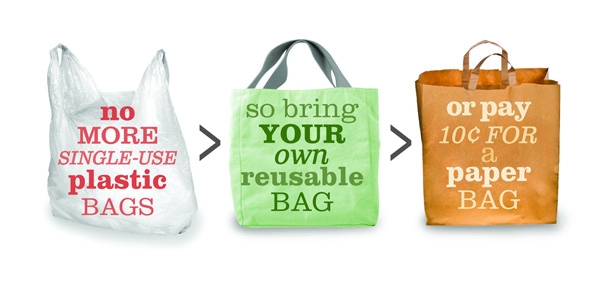
Here...we found this slogan in an American shop, as a support for plastic bag ban ordinance...


Have you started carrying your own reusable bags?


#BeModernBeResponsibleBeRespectful


    Samuchit Enviro Tech.     samuchit@samuchit.com     www.samuchit.com

Friday, April 17, 2015

Wednesday, April 8, 2015

Hard-hitting plastic facts...How plastic bags are killing us

How plastic bags are killing us


  • Only 1-3% of plastic bags are recycled worldwide.  
  • The amount of petroleum used to make 1 plastic bag would drive a car about 11 meters. 
  • Plastic bags don't biodegrade, they photdegrade- breaking down into smaller and smaller toxic bits contaminating soil and waterways.  They then enter the foodweb when animals accidently ingest them.  
  • Industry figures show 90% of all grocery bags are plastic.  


* Facts gathered from www.loveyourearth.org and imhabitat.com


    Samuchit Enviro Tech.     samuchit@samuchit.com     www.samuchit.com