(The original Marathi article was published in Maharashtra Times Sunday Supplement on 17 Dec 2023. This is the English translation.)
Outcome of COP28
Priyadarshini Karve, Convener, Indian Network on Ethics and Climate Change (INECC)
After the industrial revolution in the mid-19th century in Europe, industrialization based on mineral coal and other fossil fuels took off in Europe. Although political empires of European countries broke down globally after the Second World War in the twentieth century, globalization of industrialization based on fossil fuels continued. Due to the increasing use of fossil fuels, the concentration of carbon dioxide and other greenhouse gases in the environment has increased, leading to a rise in average temperature, contributing to global warming, a phenomenon that became widely recognized after the 1960s through scientific research. Since 1980s scientists started warning that due to this temperature increase, the delicate balance of local weather everywhere will be disrupted, leading to adverse effects on people's livelihoods and economies in the coming century. Acknowledging this threat, the establishment of the 'United Nations Framework Convention on Climate Change' (UNFCCC) took place in the 1990s under the auspices of the United Nations. In this field, the 'Intergovernmental Panel on Climate Change' (IPCC) was established during the same period to gather scientific knowledge and to provide interpretations of the science for the policy makers across the world. It is expected that based on the periodic and well-publicized reports of the IPCC, the UNFCCC should formulate strategies to tackle global warming and participating countries should implement and adhere to them.
To monitor the progress of these efforts, annual sessions lasting two weeks are held in November-December. These gatherings are known as the 'Conference of Parties' or 'COP.'
In 1997, a significant decision was made during the third meeting of the United Nations Framework Convention on Climate Change (UNFCCC) held in Kyoto, Japan, known as the 'Kyoto Protocol.' Recognizing that 37 developed countries have reaped the maximum benefit from the use of fossil fuels until the 1990s, it was considered their responsibility to save the world from the impending crisis. To reduce the emission of greenhouse gases, these countries committed to concerted efforts, and the new concept of carbon market emerged from this.
However, the developed countries did not fulfill their responsibilities under the agreement. By 2010, it was obvious that the Kyoto Protocol had totally failed. Nevertheless, the information about the issues related to global warming reached citizens and stakeholders in developed countries, leading to increased awareness. This lead to a few responsible industries taking action, but the efforts made were quite inadequate.
From the industrial revolution until the 2010s, there was a noticeable increase in the average temperature of the earth. This temperature rise had diverse consequences, affecting different parts of the world. There was a reduction in snow cover at the poles, an increase in the sea level, disruptions in rain cycle, and an increase in natural disasters like cyclones. The awareness of this global crisis reached ordinary people worldwide.
Scientists had indicated that if the unrestricted use of fossil fuels continued, the Earth could warm by more than 5-6 degrees Celsius by 2100. This warming had the potential to disrupt global socio-economic systems, affecting the lives of people and the environment. Perhaps these warnings gave an impetus to the negotiations and all the countries agreed on a new approach to tackle climate change in the COP at Paris in 2015.
The Paris Agreement in 2015 aimed to limit global warming to
well below 2 degrees Celsius, and strive to keep it below 1.5 degrees Celsius above
pre-industrial levels. Countries agreed to voluntary action plans and regular
reporting of progress. The agreement acknowledged that developed nations, which
had historically contributed more to greenhouse gas emissions and totally
failed to implement the Kyoto agreement, needed to support developing nations
in their efforts to address climate change. The Paris agreement was to be
operationalised from the start of 2021 but that was delayed due to COVID-19
pandemic. However by now more or less all the countries have worked according
to the agreement for a couple of years. New commitments are expected in 2025.
Recently COP28 concluded in Dubai, United Arab Emirates. To take stock of the
progress so far and to initiate formulation of the next set of commitments was
the main agenda for this meeting.
After 2010, significant advancements in renewable energy technologies and some efforts under the Paris Agreement have led to a collective result. As a result, the estimated increase in the Earth's average temperature due to greenhouse gas emissions is now projected to stabilize around 3-4 degrees Celsius by 2100. Although this goal is more challenging than the target of limiting the increase to 1.5-2 degrees, if more ambitious commitments are made by countries every 5 years and if the low carbon technologies continue to develop rapidly, this target is still achievable.
Despite the progress, the global use of fossil fuels continues to rise. The Earth's average temperature has already increased by 1.2 degrees Celsius. According to scientists, limiting the temperature increase to 1.5 degrees is difficult but not impossible. If beyond 2030, fossil fuel consumption decreased globally and in the next two decades, it dropped to zero the target can be achieved. However if the fossil fuel continued to rise beyond 2030 the temperature increase will go beyond 1.5 degrees by 2050 and the second half of the 21st century will destroy the progress made by humans over the last 11-12 thousand years. Science is clearly warning that this is not a battle for some distant future but it is a battle for survival for you and me and our children and grandchildren that are already here. The future will be decided by what decisions are taken about the energy generation and use by us in our personal and professional lives and by the governments on the policy and implementation level. We are all creating the history of the future today.
The outcome of the COP28 that ended on 13 December should be seen in this background. This year's conference was hosted by a country at the forefront of providing fossil fuel to the world. The host country had chosen the head of its leading petroleum company to lead the conference. Therefore many people were afraid that the slow moving train of the Paris agreement might be derailed in this meeting.
It is crucial to address the continued use of mineral fuels to avoid reaching the 1.5-degree threshold and experiencing irreversible consequences. The future will witness changes in how countries, individuals, and businesses generate and utilize energy. The official implementation of the Paris Agreement is expected to begin in 2021, emphasizing the urgency of global cooperation. The Conference of Parties (COP 28) held in Dubai under the leadership of the United Arab Emirates provided a platform for discussing and advancing climate-related initiatives.
The beginning of the COP was marked by an important and satisfying
decision. In the past year, during the 'COP 27' held in Sharm El Sheikh, Egypt,
a significant decision was unanimously reached. To assist poorer countries
facing the most severe impacts of climate change, a new fund named 'Loss and
Damage' was proposed. Developed countries were urged to contribute. United Arab
Emirates, being a prosperous but developing country, declared its commitment on
the first day of 'COP 28' by contributing to this fund. This step put a moral
pressure on the developed countries and several of them announced their own
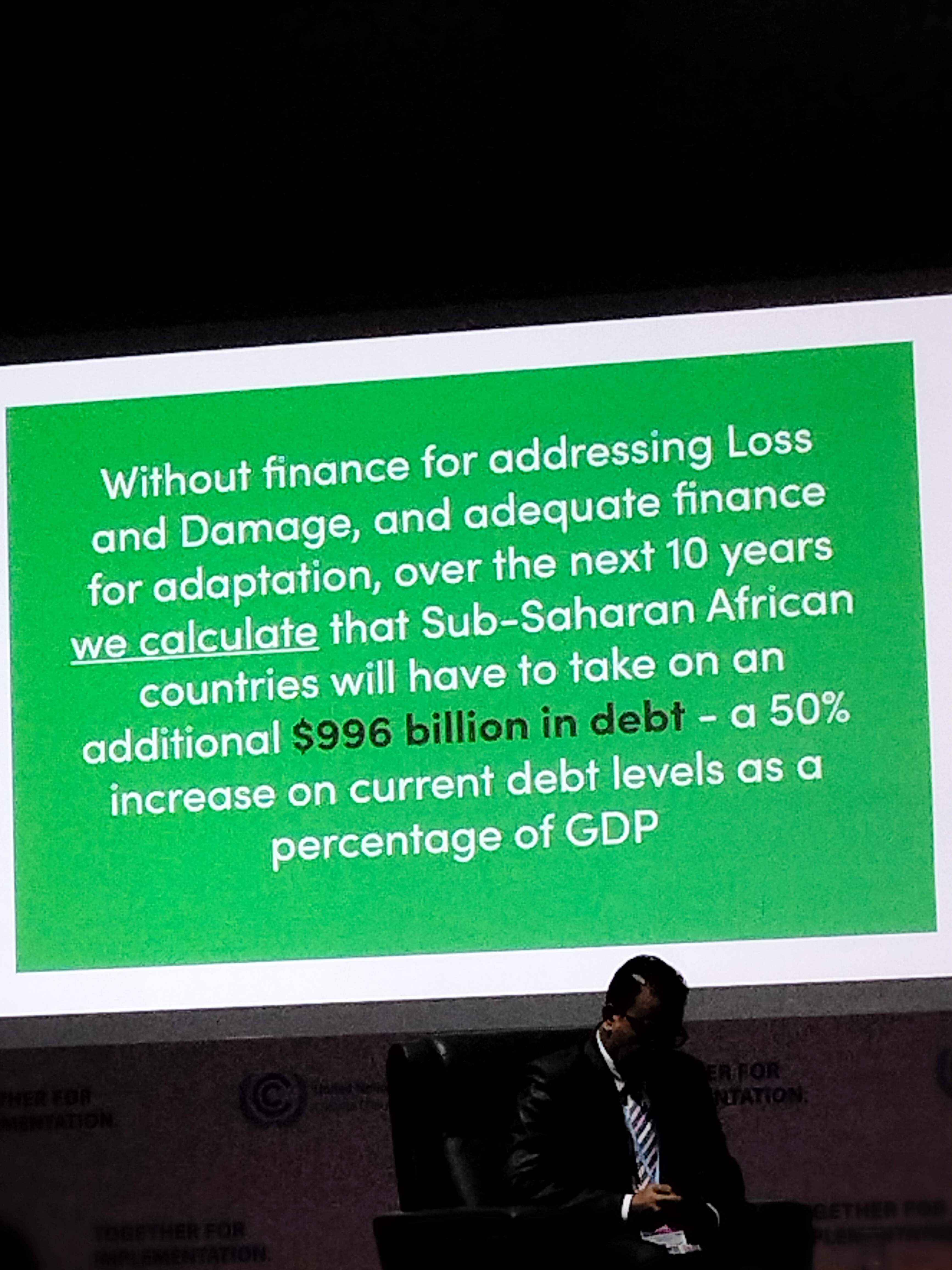
contributions. Unfortunately, the developed countries have yet to fulfil their
promised financial assistance for adaption to the developing countries. This
new fund has faced financial challenges, with only a few hundred thousand
dollars announced despite the urgent need for billions for 'Loss and Damage.'
The last 2-3 days of extensive negotiations lead to a
declaration that pleasantly surprised many.
In global geopolitics, the fossil fuel producers have such a strong grip on the world politics that in the past 27 years, the term 'fossil fuels' has not even been mentioned in any unanimous declaration from UNFCCC. Perhaps, for this reason, mineral fuel-producing countries needed to take leadership roles! Due to the global temperature rise caused by coal and other petroleum fuels, the world needs to transition away from fossil fuels, has been mentioned in various contexts in this declaration. However, there is also criticism that the wording is vague and can therefore create loopholes. However many people believe that now that the issue has been stated the ambiguities can be resolved over the years. Had this transition started from the start of the century many communities worst affected by climate change could have been saved. This regret has also been expressed by the few commentators.
 |
| Protestors at COP28 demanding that Africa must get technology and finance to go in for renewable energy in a big way. |
Lack of economic aid required for developing countries to move away
from mineral fuels was emphasized in this declaration. The developed countries
had managed to keep such a mention out of the declarations for years. 'COP 28'
has achieved success in this regard on the international stage. However, the
failure of developed countries in this regard has not been explicitly
mentioned. The declaration aspires to triple the renewable energy generation in
this decade, and this needs to be welcomed.
These issues have been mentioned in the declaration. Now, these
need to reflect in the declarations to come in 2025 from each country. For
this, all wise and responsible citizens worldwide need to create public
pressure on their governments. Can common people go beyond their national
prides, to build bridges over the disagreements, debates, and wars of their
national and international interests to build a global unity for the sake of
the bright future of human society? This is the pertinent question.